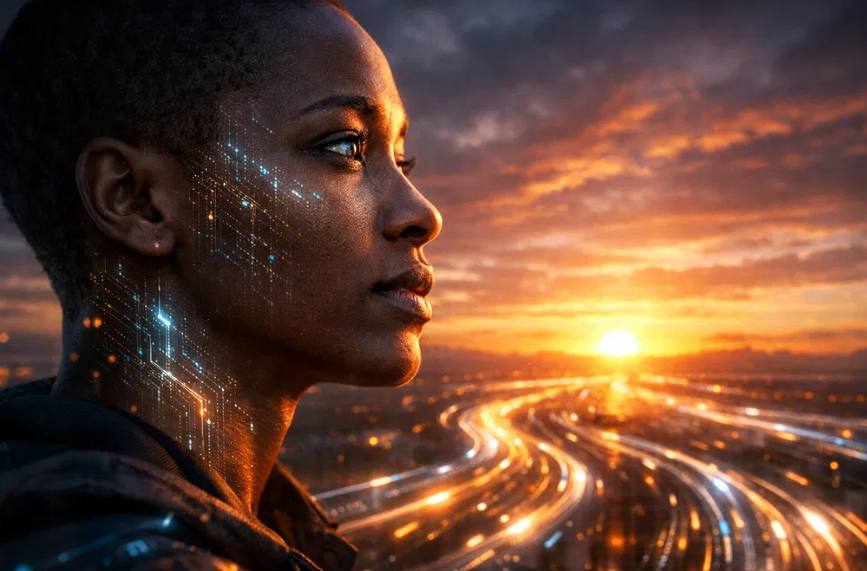
We are living through one of the most important shifts of our time, and it is not only technological. It is deeply human.
As artificial intelligence and extended reality move from innovation labs into classrooms, workplaces, healthcare, business, entertainment, and everyday decision-making, they are doing more than improving systems. They are reshaping how people think, interact, learn, trust, and define meaning. The conversation, therefore, must go beyond what these technologies can do. We must also ask what they are doing to the human experience.
This is the question that matters most!
Artificial intelligence is increasingly woven into daily life. It helps generate ideas, recommend actions, personalize learning, automate tasks, and support decision-making. Extended reality, or XR, combines virtual, augmented, and mixed realities to create immersive environments that blend the physical and digital worlds. On their own, each of these technologies is transformative. Together, they are creating a new kind of human environment, one that is intelligent, immersive, adaptive, and highly influential.
That reality brings both opportunity and responsibility. AI and XR can help people work smarter, learn faster, create more freely, and access experiences that were once out of reach. They can support accessibility, unlock creativity, and deepen engagement. In many settings, they can make knowledge more understandable, communication more interactive, and training more experiential. This is one reason so many organizations, institutions, and industries are embracing them with urgency. But progress should never be measured solely by capability. It should also be measured by its effect on human flourishing.
As these technologies become more present in everyday life, they are changing the nature of experience itself. Technology is no longer simply something people use from the outside. Increasingly, it is something people live through. AI is becoming a constant thinking companion, shaping how users search, write, decide, and interpret information. XR is making digital experiences feel more embodied, turning interaction into immersion. A meeting can become a virtual space. A lesson can become a simulation. A system can begin to anticipate not only what a person needs, but how they are likely to respond. This creates exciting possibilities, but it also raises a deeper challenge. If our environments become more intelligent and immersive, what happens to the qualities that make us most human?
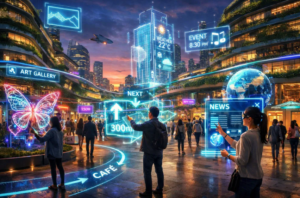
In many ways, AI and XR can strengthen humanity when designed and used responsibly. They can enhance creativity by helping people move from ideas to action more quickly. They can support learning by adapting to different needs and styles. They can broaden access by removing barriers to knowledge, communication, and participation. They can even deepen empathy by exposing people to perspectives and experiences beyond their own. These are meaningful contributions that remind us that technology can be a powerful extension of human potential.
Yet every extension of capability should also prompt reflection. The same systems that help people think can also discourage them from thinking independently. The same environments that make experience more immersive can make people more vulnerable to distraction, manipulation, or escape. The same personalization that makes tools more effective can also narrow perspective if users are constantly shown only what aligns with past behavior or predicted preference.
One of the most important risks in this era is the erosion of independent thought. When systems become highly skilled at generating responses, recommendations, and decisions, it becomes easy to mistake efficiency for wisdom. People may begin to rely on output without fully examining assumptions, limitations, or consequences. Over time, this can weaken the habit of discernment. It can reduce the willingness to wrestle with difficult questions, sit with uncertainty, and arrive at conclusions through reflection rather than convenience. This matters because independent thought is not a luxury. It is part of human dignity. It is how people preserve judgment, responsibility, and moral agency in a world filled with influence.
There is also a growing need to protect authentic human connections. Technology-mediated interactions can be efficient and engaging, but human relationships are built on more than responsiveness. They require presence, vulnerability, trust, accountability, and shared experience over time. As AI and XR continue to mediate more aspects of life, society must be careful not to confuse access with intimacy or interaction with genuine connection. Convenience can enhance communication, but it should not replace the deeper human work of relationship-building.
Another challenge lies in identity. In a constantly shifting intelligent world, people can begin to anchor their sense of self in systems that are always changing. If identity becomes too dependent on algorithmic affirmation, digital visibility, immersive escape, or curated personas, it may become fragile. A stable sense of self must be rooted in something deeper than platforms and performance. It must be grounded in values, purpose, character, and the relationships that remind people who they are beyond any system or interface.
This question is especially pressing for younger generations growing up with AI and XR as a normal part of life. For them, the line between digital and physical, human and machine-assisted, may feel far less distinct. That is why future-ready education cannot focus only on tool usage. It must also develop critical thinking, ethical reasoning, emotional intelligence, self-awareness, and digital discernment. The people who thrive in this future will not simply be the ones who know how to use intelligent technologies. They will be the ones who know how to remain grounded while doing so.
Intentional living is also becoming more important in an immersive, intelligent world. When technologies are designed to anticipate needs, personalize experiences, and hold attention, it becomes essential for people to decide what they want to shape their lives. Purposeful living means using technology in the service of values rather than allowing it to quietly define those values. It means asking whether a tool helps a person grow, connect, create, and contribute, or whether it simply keeps them stimulated, dependent, or distracted. Some of the most meaningful parts of life cannot be optimized. Wisdom, trust, character, and purpose are not products of convenience. They are formed through reflection, challenge, discipline, and human presence. In this sense, intentional living is becoming a necessary counterbalance to technological immersion.
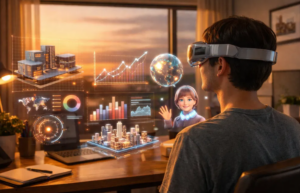
Trust is another defining issue in the age of AI and XR. As more experiences are mediated by intelligent systems, people need transparency into what is happening, how decisions are made, what data is used, and who remains accountable when harm occurs. Trust cannot rest on technical sophistication alone. It must be built through clarity, honesty, consistency, governance, and respect for human dignity. In a world of increasingly seamless interactions, people deserve to know when they are engaging with a human, an AI, or some combination of the two.
Meaning is also worth reconsidering. If content, environments, and experiences can be generated or altered instantly, then novelty is no longer enough to create value. Meaning comes from significance, context, transformation, and relationship. A generated experience may be impressive, but it becomes meaningful when it shifts perspective, inspires action, deepens understanding, or strengthens human connection. Technology may create experience, but people still create meaning.
This is why the line between support and dependence must remain visible. AI and XR are powerful when they build human capacity. They become problematic when they begin to replace human agencies. Support helps people learn, improve, and function more effectively. Dependence erodes confidence, skill, and judgment over time. The real question is whether these systems empower people to become more capable or condition them to become less so.
Looking ahead, the most important skills will not be purely technical. Technical fluency will matter, but deeply human capacities will matter just as much, if not more. Critical thinking, adaptability, ethical reasoning, creativity, emotional intelligence, communication, and identity awareness will all become essential. The future will belong not just to those who know how to use powerful systems, but to those who know how to question them, guide them, and place boundaries around them.
AI and XR are not just technological developments. They are human developments. They are forcing society to revisit old questions in new forms: What gives life meaning? What makes trust possible? How do we preserve agency? What does authentic connection look like in the mediated world? How do we remain fully human while building increasingly intelligent systems? These are not side questions. They are the central questions.
The future of human experience will not be shaped only by engineers or platforms. It will also be shaped by educators, leaders, researchers, policymakers, designers, and everyday people who choose what role technology should play in a well-lived life. If AI changes how we think and XR changes how we experience, then humanity must be intentional about what values guide both.
The goal cannot simply be to create smarter systems or more immersive environments. The greater goal must be to ensure that these systems and environments strengthen wisdom, dignity, trust, and human flourishing.
That is the future worth building.
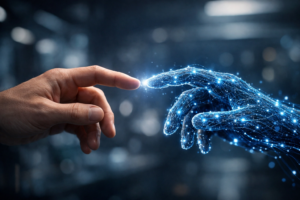
As we continue exploring the promise of AI and XR, perhaps the most important question is not how advanced these technologies will become, but whether humanity will remain thoughtful enough to guide them well.
What do you think will matter most in preserving human experience as AI and XR become more embedded in everyday life?