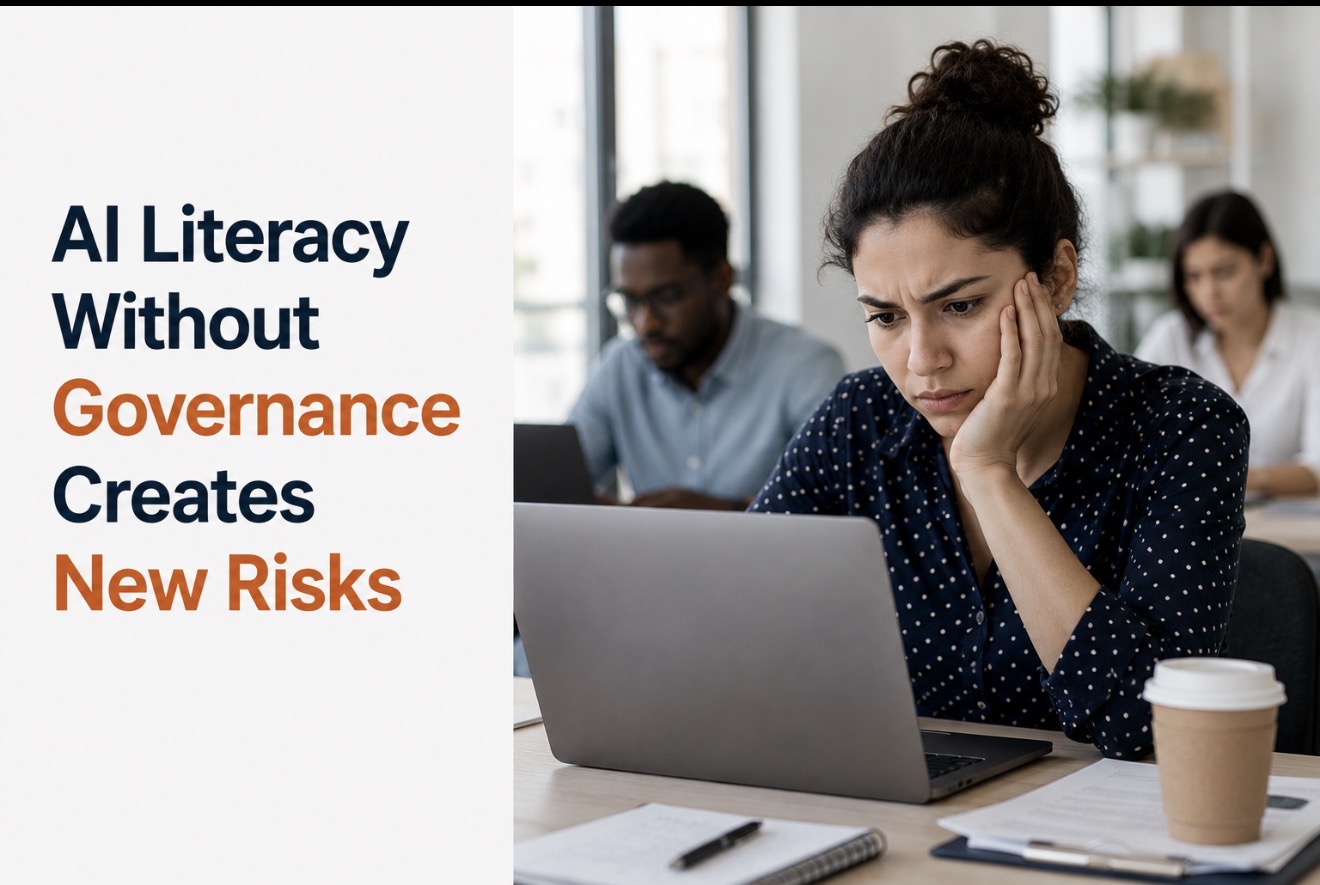
Artificial intelligence (AI) is no longer sitting at the edge of education, business, or public conversation. It is already shaping how people write, research, teach, learn, communicate, analyze information, and make decisions. Across schools, universities, and workplaces, there is growing pressure for individuals to become AI-literate by learning to use generative AI platforms, copilots, automated assistants, and intelligent search tools. That push is important. However, one question often goes missing: What happens when people know how to use AI but do not know how to evaluate it responsibly?
As someone who recently delivered a keynote on AI governance in education, this issue stood out to me clearly. AI literacy alone is no longer enough. Knowing how to write a prompt, generate content, summarize a document, or automate a task does not automatically prepare a person to manage the risks of relying on AI-generated outputs. In fact, increased AI use without proper governance can unintentionally create new academic, organizational, and decision-making risks.
The concern is not simply that people are using AI. The deeper concern is how they decide when to trust it.

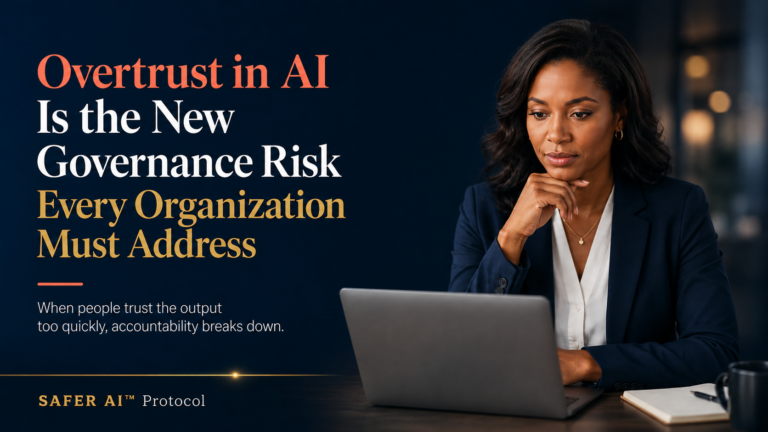
Many conversations about AI in education still focus heavily on cheating and plagiarism. Those concerns matter, but they do not tell the full story. A larger issue is quietly growing: overreliance. AI systems can produce responses that sound confident, polished, and persuasive, even when the information is inaccurate, incomplete, biased, or unsupported. When students, faculty, professionals, or leaders accept AI outputs without questioning them, the risk moves beyond misuse. It becomes a problem of judgment. This is where governance becomes essential.
AI governance is not just about rules, restrictions, or compliance documents. At its best, governance creates structures that help people use AI responsibly. It clarifies expectations, defines boundaries, assigns accountability, and establishes how AI outputs should be reviewed, verified, documented, and applied. Governance helps institutions answer important questions: where AI is appropriate. When is human review required? What level of evidence is needed before an AI-supported decision is accepted? Who is responsible when AI gets it wrong?
Without governance, AI literacy can unintentionally increase vulnerability. A student may know how to generate a research summary but may not know how to assess the credibility of sources. An employee may know how to use AI to draft a report, but may not notice that the recommendation is based on flawed assumptions. A faculty member may encourage AI use in the classroom without clear expectations for transparency, citation, or reflection. A leader may rely on AI-generated insights without asking whether the data, context, or outcome has been properly examined. In each case, the person has access to AI and may even know how to use it well. But the missing piece is responsible reliance.
This is why the future of AI literacy must go beyond tool usage. True AI literacy should include critical thinking, verification, ethical awareness, contextual judgment, and human responsibility. People must learn not only how to generate AI outputs, but how to question them. They must know how to ask: Is this accurate? Is this complete? What evidence supports it? What assumptions are hidden? What could go wrong if I act on this?
Education is at an important turning point. For many years, academic success has often emphasized producing the right answer. AI is now forcing institutions to rethink what meaningful learning should look like. The value of education is shifting toward reasoning, evaluation, interpretation, and the ability to defend decisions. This moment reminds me of the introduction of calculators into classrooms. Calculators changed how mathematics was taught because students no longer needed to spend as much time on manual computation. Instead, the focus expanded toward problem-solving and understanding.

AI is creating a similar shift, but the stakes are much higher. A calculator gives an answer to a defined mathematical input. AI can generate explanations, recommendations, arguments, summaries, lesson plans, research ideas, business strategies, and even decision-support outputs. As a result, AI not only affects what people produce, but also how they produce it. It affects what people believe, trust, and act upon. That makes governance necessary. The goal is not to make people afraid of AI. AI can support learning, improve access, strengthen productivity, assist research, and open new opportunities for innovation. But for these benefits to be trusted, institutions must build responsible systems around AI use. They need policies, yes, but also education, oversight, documentation practices, and a culture that expects verification.
AI literacy teaches people how to use the tool. Governance teaches people how to use it wisely. Organizations that focus only on adoption may appear innovative in the short term, but they may expose themselves to deeper risks over time. The strongest institutions will not simply be the ones using the most AI tools. They will be the ones helping people understand when AI should assist, when humans must intervene, and when an AI output should not be accepted at all.
As AI becomes more deeply embedded in education and work, the central question will no longer be whether people can use it. Many already can. The more important question will be whether they can use it responsibly, critically, and with the right guardrails in place. AI literacy matters. But without governance, it can create new risks that institutions cannot afford to ignore.

The future of AI will not be defined only by how powerful technology becomes. It will also be defined by how wisely humans choose to rely on it.
#AIGovernance #ResponsibleAI #ArtificialIntelligence #AILiteracy #GenerativeAI #HumanCenteredAI #AIinEducation #AILeadership