Now we know that AI is no longer limited to generating text, images, or recommendations.
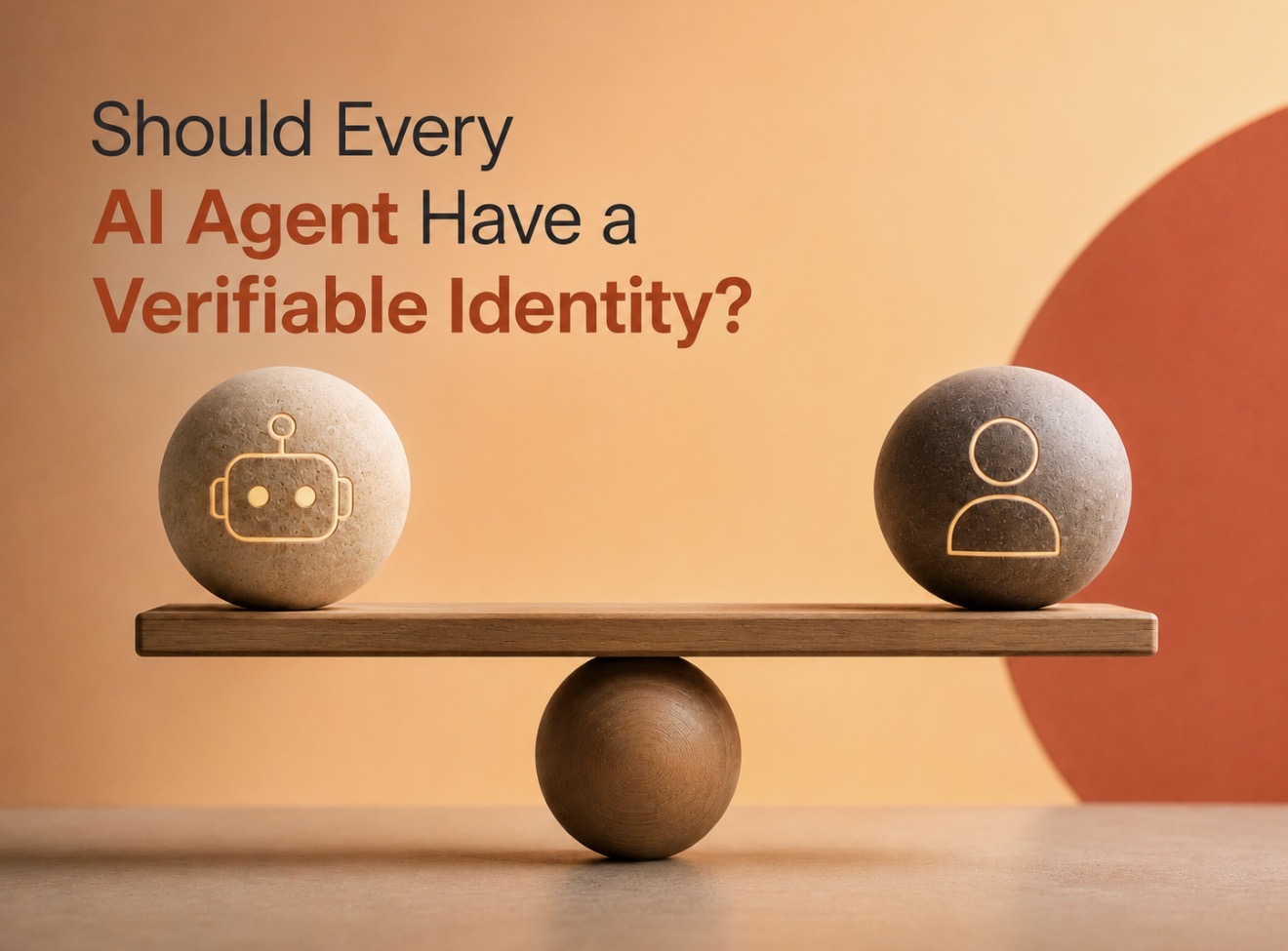
AI agents can now access systems, send messages, analyze records, initiate workflows, and take actions on behalf of individuals and organizations. This raises a critical question: Should every AI agent have a verifiable identity?
For years, AI governance focused mainly on outputs. Leaders asked whether AI-generated content was accurate, biased, explainable, or safe. But once AI can act, governance must go further. Organizations need to know which agent performed an action, who authorized it, what permissions it had, and who remains accountable when something goes wrong.
AI agent identity is becoming a global priority, and this issue is already attracting serious attention.

In July 2026, the International Telecommunication Union announced a new Focus Group on Trust and Identity for Humans and Agentic AI. The group will examine how humans and AI agents can identify and authenticate one another while supporting traceability, oversight, and accountability.
Earlier in 2026, the National Institute of Standards and Technology also launched an AI Agent Standards Initiative focused on secure, interoperable, and trustworthy AI agents.
These developments reflect a growing reality: AI agents cannot be allowed to operate as invisible digital actors.
A Name Is Not an Identity!

Giving an AI agent a name, avatar, or email address does not create a meaningful identity.
A verifiable identity should specify who deployed the agent, which organization is responsible for it, which systems it may access, which actions it may perform, and when its authority expires. It should also identify the human or organizational role responsible for supervising it. This matters because capability is not the same as permission.
An AI agent may be able to send a payment, reject an applicant, modify a record, or communicate with a customer. That does not mean it should automatically have the authority to do so.
An agent may be permitted to draft an email but not send it. It may summarize a loan application, but not approve the loan. It may flag a medical risk but not make the final clinical decision.
Identity must therefore be connected to authority. Every Agent Needs an Accountable Human Owner!
An AI agent cannot accept legal, ethical, or professional responsibility. It cannot appear before a regulator, lose a license, face disciplinary action, or repair the harm caused by a poor decision.
Accountability must remain with people and institutions. Every consequential AI agent should have a clearly identified human owner or accountable organizational role. That owner should approve the agent’s purpose, access, authority, and escalation process.
Organizations should also be able to reconstruct what happened after an agent takes action. They should know which agent acted, what information it used, what authority it possessed, whether a human approved the outcome, and what record was retained.
Without that evidence, an organization may have automation but not accountable automation.
The SAFER AI™ Protocol Perspective
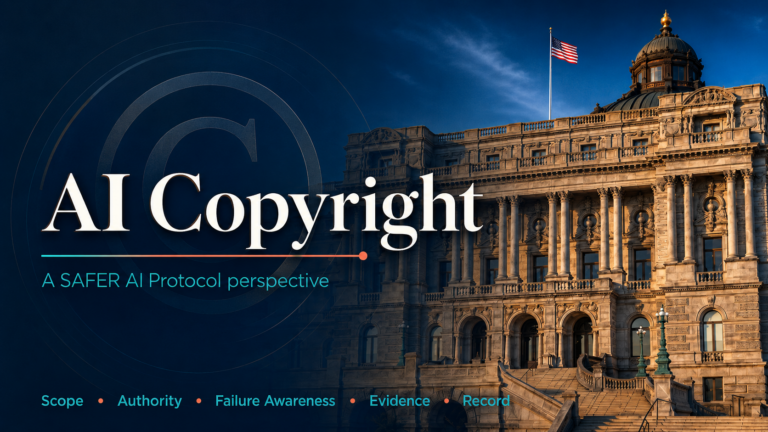
This challenge aligns directly with the SAFER AI™ Protocol: Scope, Authority, Failure Awareness, Evidence, and Record.
Before an AI agent acts, its scope should be defined. Before it exercises power, its authority should be established. Before its actions are trusted, the possibility of failure should be recognized. Before a consequential decision is accepted, sufficient evidence should be available. After the action occurs, a reliable record should remain.
A verifiable identity connects these requirements to a specific agent. It allows an organization to determine what the agent was created to do, what it was allowed to do, what it actually did, and who remained responsible for the outcome.
The greatest danger may not be an AI agent producing a visibly incorrect answer. The greater danger may be an AI agent taking consequential action without anyone clearly able to explain who authorized it.
Identity does not mean personhood. Giving an AI agent a verifiable identity does not mean treating it as human or granting it independent rights. The purpose is not to elevate the agent. The purpose is to make it governable.
People should also know when they are interacting with an AI agent, especially in healthcare, education, employment, finance, and public services.
Here are the questions leaders must answer because many organizations still govern AI as though it were only a tool for generating content. That approach is no longer enough. Before deploying an AI agent, leaders should be able to answer some fundamental questions:
Can we prove which agent is acting, whose authority it carries, what it is permitted to do, and who will answer for its actions?
When AI can act, verifiable identity is where accountability begins.